
In an effort to keep myself engaged with the website and mitigate the time blindness that seems to keep occuring, I aim to write and post a blog at least once a month. A large part of being neurodivergent and trying to turn one’s hobbies into a business is the persistent struggle to focus on one task to completion rather than starting multiple tasks and leaving them unfinished. With that in mind, I find more factual blogs easier to write than ones based on opinion. So here goes.
An Introduction
Resin printing, as the name implies, is the art of 3D printing using resin. Unlike printing with filament, where many layers of solid material are extruded from the hot nozzle to build up a solid object, resin is a liquid that is hardened by UV light of specific wavelengths (405nm in my case) layer by layer while submerged. This resin liquid doesn’t require mixing and is simply poured into the vat when needed in the desired amounts. You can then select a pre-sliced model to print and watch it do its thing.
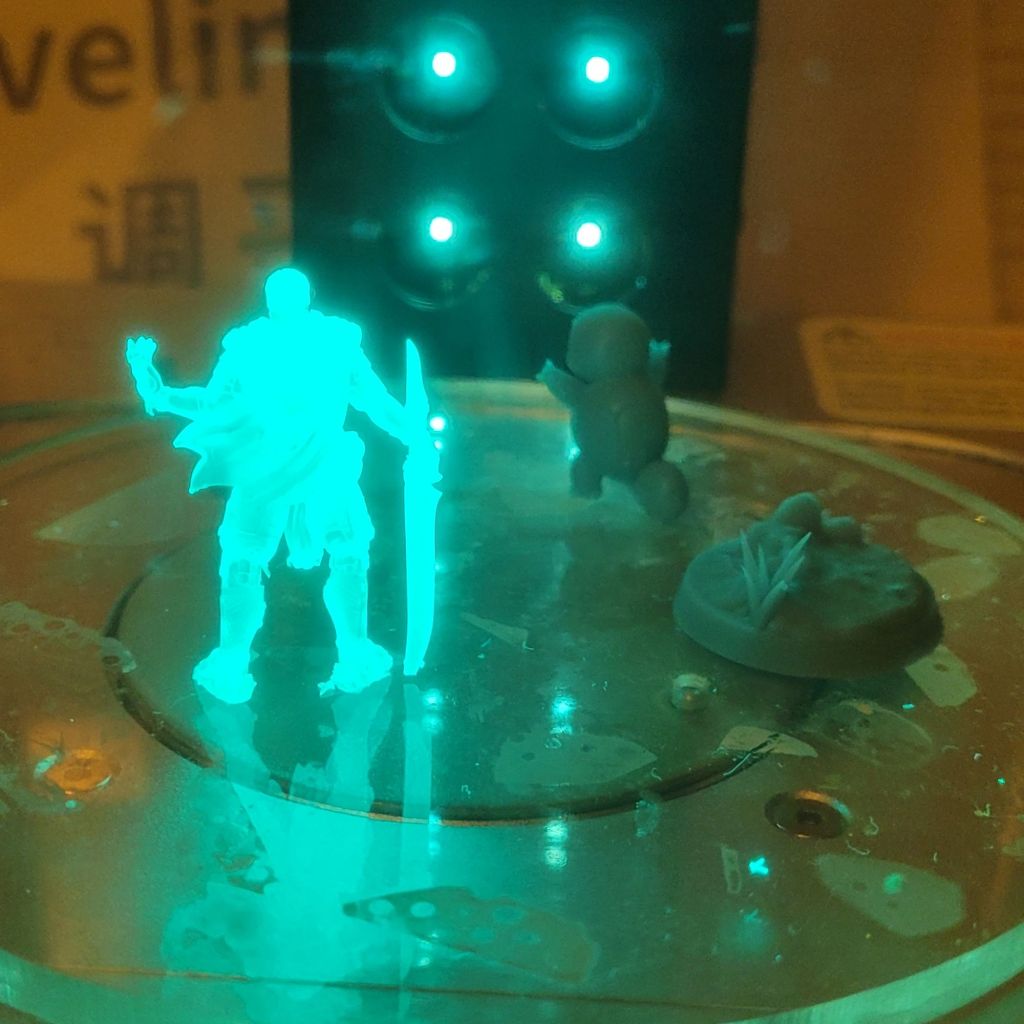
Now, it’s not quite as simple as press-start-and-it-works in most cases, unless you’re comfortable enough with the printer and have it set up correctly. There are many issues that can happen and so much that can go awry if you decide to forego safety or security for a quicker print, so I suppose I should get into the details now!
A Warning: Resin Safety
Whether it’s single-part UV resin as used in printers, or two-part epoxy that I use to make dice and other things, there are a lot of hazards and risks when working with such toxic materials. As the world recently discovered when a certain company began selling uncured resin toys to children, hospital visits can occur if you don’t know your stuff.
The warnings on the packaging are quite clear on most resins: it is a toxic material in its uncured form and can cause physical injury. Whether through ingestion, inhalation, or merely touching with your skin, there’s a possibility for injury. This includes struggling to breathe, nausea, burns, sensitivity, and even developing an allergy to a specific part of the compound. While developing an allergy to resin might not sound too bad – especially if you plan on wearing protective equipment from then onwards – there have been cases where the allergy extends to non-resin materials that share a similar composition, which could include every-day objects. Imagine developing an allergy to the plastic on your mobile phone!
It’s for these reasons that safety is paramount when using resin, much like every other toxic material. Some chemical scientists don’t see the fumes as particularly harmful in small doses, but I think it’s safe to say it’s better to be safe than sorry. Personally, I always wear a respirator or mask rated for chemical fumes, I always make sure my body is covered and there is minimal bare skin, and – the most important part in my opinion – I always wear nitrile gloves, which I change between each operation. By that I mean a new pair whenever I’ve touched the resin and intend to do something else, whenever I’ve handled the industrial-grade alcohol, and even if I’ve touched something that may be contaminated with resin such as one of the bed scrapers. Is it wasteful? Sure, but I’d much rather look after my health for the sake of an extra pair of gloves each print. I also make sure the printer is away from family areas (it currently resides at the back corner of my workshop, next to an open window at the opposite end of the room. A room, might I add, that is only every visited by myself and always has a closed door) and anything produced is fully cleaned and cured before it ever leaves the room.
With that huge negative part aside, there are some positives to resin printing.
The Positive Side
“So why use resin printing if FDM is so much safer?”
Well, it entirely depends on what you want to do with it. The primary market seems to be hobbyists, specifically ones who lean towards collecting figures or miniatures. With the introduction of affordable resin printers into the household, and the accessibility of open-source 3D modelling programs, people don’t need to spend hundreds on an army of plastic miniatures from *insert wargames company here.* Instead, they can curate a bespoke army for a fraction of the overall cost, or supply one-off miniatures to their D&D or Pathfinder group, for example. After all, 1kg of resin costs around the same as a regiment of undead and will easily create 10 such regiments, if supported sparingly. In the current days of inflation and wage stagnation, expensive hobbies like wargaming are suddenly much cheaper, though you do have to put in a little work of your own to achieve the same result. Similarly, figures of your favourite characters (I’m hoping for a Hollow Ichigo bust at some point) can be printed for less cost than an official one, though you’d still need to paint it.
It’s not as though these printed miniatures and figures lack in quality, either. The capability of newer printers and their ability to create layers of 10 microns – for some clarity, human hair at its thinnest is around 20 microns, an averages around 80 – means any miniatures printed are as good as the 3D model you use. I’ve personally purchased one from DMStash that shows so much minute detail on the cape that it looks like thick cotton weave, which is easily reflected in the printed mini.
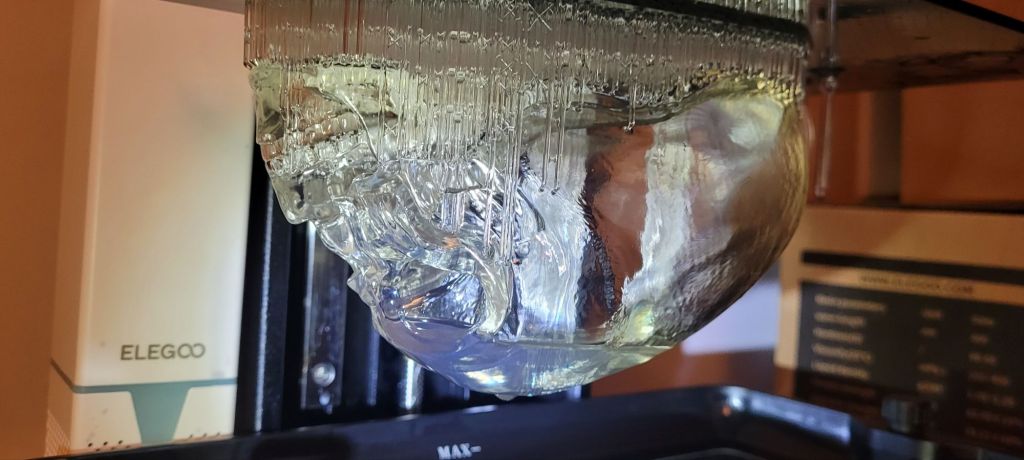
There are also many options to reduce waste and thus save cost. You can hollow out larger figures, with the caveat that a draining hole or two must be added to remove any uncured resin from inside (uncured resin gives off gases constantly, leading to a potential cracked model, leaking resin, or even a small explosion.) You can arrange models however you like to reduce visible layer lines (assuming any are visible) and add supports of varying length, thickness and spacing for your needs. A quick note about supports: while filament printers usually need more supports due to the nature of laying filament on top of other filament, resin cures the whole layer at a time and thus supports are only needed on overhangs or particularly bulky sections.
There are also cost- and time-saving features for resin printers. Unlike FDM, which heat the extruder constantly to around 200°C and use increase electricity to do so, resin printers require no heating. Their sole electrical use goes towards a small motor and two screens – one for display, one for curing resin. Time-wise, resin printers are superior in that every layer is cured in the same amount of time: while filament printers need to take into account speed, flow rate, cooling and movement per layer, the resin printer simply cures in 3.5 seconds and moves on to the next layer. This means you can fill the build plate with 100 miniatures (if they’ll fit) and it’ll take the exact same time as 1 miniature, while filament printers will have to move to each figure in turn ever layer. In short, the only adjustment to time is usually height – the taller the figure you’re printing in resin, the longer it’ll take.
The Problems
While the benefits are easy to see, there are also downsides to such hi-tech gear. Unlike a filament printer where most parts are mechanically unique to their operation, the resin printer has fewer parts with less option for an engineer like myself to tweak, adjust or replace. For example, the hot end of an Ender 3 Pro can be taken apart and put back together quite easily, as evidenced by the dozens of times I’ve done so in order to replace a part or perform maintenance and cleaning. The resin printer, however, has much more expensive parts that I’d loathe replacing. The LED screen that blocks light and allows for printing can be expensive, the build plate is specific to each model so extreme wear and tear will likely lead to a whole new plate rather than the magnetic sheets on Ender 3’s, and the membrane at the base of the vat that allows for cured resin release is also expensive, fiddly to replace, and occasionally a pain to tension correctly.
There’s also the issue of errant resin. The occasional blob of filament can easily be heated up and removed with minimal effort or damage, but resin cured inside the machine due to a leak? You’re talking about replacement parts and potentially hefty costs, especially if it’s penetrated electronics. It’s for this reason that I am so, so careful when handling my Elegoo Saturn 3; If I ever drop the plate onto the screen or spill some resin on the body of it I’ll likely start crying on the spot.
As mentioned earlier, the health risks are ever present too. Not only is the resin toxic to touch and must be handled with care, but the alcohol used to clean it makes the air nigh-unbreathable. Sure, you can get water-washable resin, but I’ve heard it’s a simple gimmick that doesn’t hold up to most experiences.
In Conclusion
I guess a short and sweet conclusion is in order: resin printing gives insane quality and detail in a quick time at less cost, but you have to be safe with it. Like, really safe, or you might give yourself or others in your household health problems.
Cleaning out the vat isn’t fun either, but that’s just because it’s liquid.
 KoZy Crafting
Leave a comment